Digital Twins of Cities: How They Function in Real Urban Environments
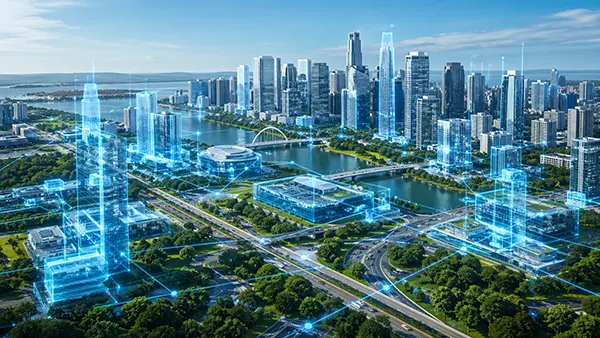
Digital twins of cities are no longer abstract concepts discussed only in research papers. By 2026, they are actively used in transport planning, energy management, and urban safety systems. A digital twin is essentially a dynamic virtual model of a real city, continuously updated through data streams from sensors, infrastructure, and connected devices. This allows authorities and engineers to analyse urban processes in real time and test decisions before applying them on the ground.
Core Principles Behind Urban Digital Twins
At the heart of any city-scale digital twin lies data integration. Information from traffic cameras, IoT sensors, weather stations, and public transport systems is collected and processed in a unified environment. Unlike static 3D models, these systems reflect current conditions — from congestion levels to air quality indicators — making them practical tools for daily decision-making.
Another key element is simulation capability. Urban planners can test how changes, such as new road layouts or zoning adjustments, would impact traffic flow or energy consumption. This reduces risks and costs associated with physical implementation. Cities like Singapore and Helsinki already rely on such simulations to optimise infrastructure investments.
Cloud computing and edge processing also play a major role. The volume of data generated by modern cities is enormous, and processing it efficiently requires distributed computing systems. By 2026, hybrid architectures combining local processing and cloud storage have become standard practice in large urban digital twin deployments.
Data Sources and Real-Time Synchronisation
Real-time synchronisation depends on a wide network of sensors embedded in urban infrastructure. These include smart traffic lights, environmental sensors, connected vehicles, and even smartphones. Together, they provide continuous updates that keep the digital twin aligned with real-world conditions.
Geospatial data is another critical component. High-resolution maps, satellite imagery, and LiDAR scans help create accurate 3D representations of buildings, roads, and utilities. This spatial accuracy allows engineers to model scenarios such as flood risks or construction impacts with high precision.
Data governance is equally important. Cities must ensure that collected data is reliable, secure, and compliant with privacy regulations such as GDPR. Without proper governance, the effectiveness of a digital twin is significantly reduced, regardless of technological sophistication.
Practical Applications in Modern Cities
One of the most visible uses of digital twins is in transport management. Real-time traffic modelling allows cities to adjust signal timings, reroute flows, and respond to incidents more efficiently. London and Barcelona have demonstrated measurable reductions in congestion through such systems.
Energy optimisation is another growing area. Digital twins help monitor consumption patterns across districts, enabling better load balancing and integration of renewable energy sources. This is particularly relevant as cities aim to meet carbon reduction targets set for 2030 and beyond.
Urban safety and emergency response have also improved благодаря цифровым моделям. Authorities can simulate evacuation scenarios, predict the spread of fires or floods, and coordinate response teams more effectively. This leads to faster reaction times and more informed decisions during critical events.
Urban Planning and Infrastructure Development
Digital twins allow planners to evaluate long-term development strategies with greater confidence. By modelling population growth, housing demand, and transport needs, cities can avoid costly planning mistakes and allocate resources more efficiently.
Construction projects benefit from this technology as well. Engineers can test structural impacts, optimise building placement, and identify potential conflicts with existing infrastructure before construction begins. This reduces delays and unexpected costs.
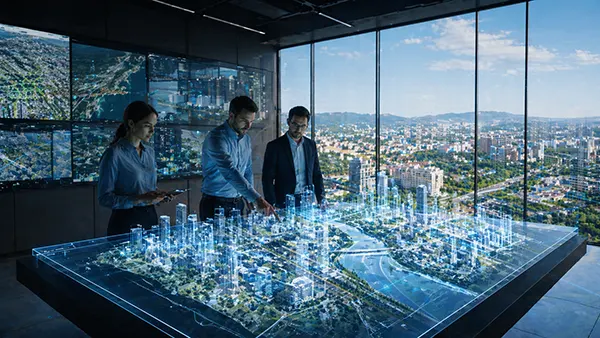
Public engagement is another emerging application. Some cities provide simplified versions of their digital twins to residents, allowing them to visualise proposed developments and provide feedback. This creates a more transparent planning process and improves trust between authorities and citizens.
Challenges and Limitations in 2026
Despite clear advantages, digital twins are not without challenges. One of the main issues is data fragmentation. Many city systems still operate in silos, making integration complex and resource-intensive. Achieving interoperability remains a key technical and organisational hurdle.
Cost is another limiting factor. Building and maintaining a full-scale digital twin requires significant investment in infrastructure, software, and skilled personnel. While large cities can justify these costs, smaller municipalities often struggle to implement similar solutions.
Cybersecurity risks are also increasing. As digital twins become central to urban operations, they become attractive targets for cyberattacks. Protecting these systems requires continuous monitoring, advanced encryption, and strict access controls.
Future Outlook for Digital Twin Technology
By 2026, the direction of development is clear: digital twins are becoming more predictive rather than reactive. Advances in artificial intelligence allow systems to forecast trends, such as traffic congestion or energy demand, with increasing accuracy.
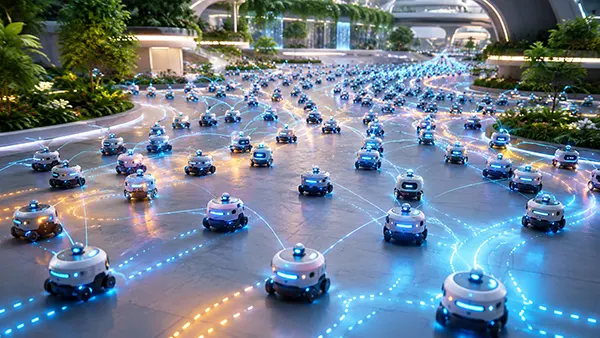
Integration with autonomous transport systems is expected to expand. Digital twins can provide real-time data to self-driving vehicles, improving navigation and safety in complex urban environments. This creates a feedback loop where both systems enhance each other.
Standardisation efforts are also gaining momentum. International frameworks are being developed to ensure compatibility between different digital twin systems, which will make adoption easier for cities worldwide. As these standards mature, the technology will become more accessible and widely implemented.