Intelligent Nanorobots for Biological Cleansing: Breakthroughs in Nanomedicine from 2023 to 2025
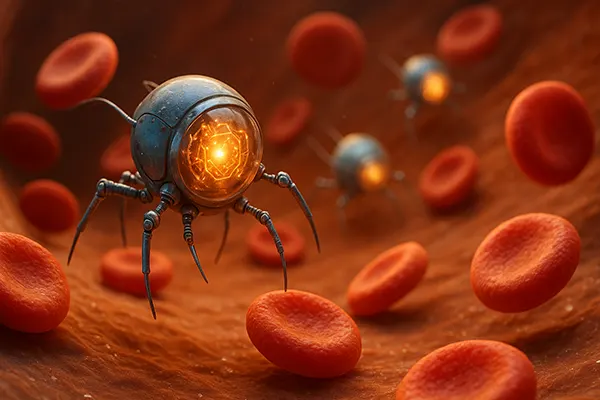
From 2023 to 2025, nanomedicine progressed from theoretical concepts to clinically validated systems capable of detecting and neutralising pathogenic molecules at a scale previously unreachable. Intelligent nanorobots, equipped with adaptive sensing modules and biocompatible architectures, are now being tested across Europe, the UK, Japan, and the United States for tasks such as targeted detoxification, vascular plaque removal, and immune-system modulation. These developments represent one of the most significant steps in precision healthcare of the decade, driven by advances in nanoscale computation, autonomous navigation, and safe medical-grade nanomaterials.
Advances in Autonomous Navigation and Real-Time Decision Systems
Between 2023 and 2025, researchers introduced nanoscale navigation systems based on magneto-acoustic feedback and micro-sensors capable of reading chemical gradients with exceptional accuracy. These technologies allow nanorobots to orient themselves in complex environments such as micro-capillaries, lymphatic channels, and intracellular spaces. Real-time decision modules based on low-energy compute units are now integrated directly into the nanostructure, enabling rapid responses to toxins or inflammatory markers.
Clinical groups in the UK and Germany demonstrated that autonomously guided nanorobots can follow predefined molecular signatures to locate accumulations of heavy metals and metabolic waste. Early trials in 2024 showed more consistent outcomes compared with passive nanoparticle-based therapies, as the autonomous models actively avoid biological obstacles and correct their trajectory.
Researchers in Japan reported in 2025 that intelligent nanorobots equipped with photonic micro-processors could identify early-stage arterial plaque layers and deliver micro-bursts of enzymatic agents with controlled intensity. These trials marked the transition from laboratory models to semi-autonomous therapeutic systems capable of functioning safely inside the bloodstream.
Engineering Biocompatible Materials for Safe Internal Operation
Ensuring long-term biocompatibility has been a priority since 2023. Modern nanorobots rely on graphene-oxide composites, biodegradable silica structures, and ultrathin polymer shells designed to degrade into non-toxic metabolites. Regulatory authorities in the EU and the UK emphasised the need for active monitoring of degradation pathways, which led to development of self-reporting nanosurfaces that emit harmless infrared signals during breakdown.
By 2024, several nanomedicine start-ups launched clinical programmes using materials engineered to minimise the risk of oxidative stress and cellular irritation. These materials undergo full dissolution within 24 to 72 hours after completing their therapeutic task, preventing long-term accumulation in organs.
In 2025, collaborative research between Swiss and British institutes introduced adaptive coating systems that adjust their charge depending on the surrounding pH. This innovation significantly reduced accidental interactions with healthy tissue and improved the overall efficiency of detoxification procedures.
Detoxification and Removal of Harmful Compounds
One of the primary applications of intelligent nanorobots between 2023 and 2025 has been targeted removal of harmful compounds circulating in blood and tissues. These include heavy metals, microplastics, synthetic chemicals, oxidised lipids, and by-products of metabolic disorders. Autonomous nanorobots detect and bind harmful molecules using molecular receptors specifically engineered for high selectivity.
UK-based medical centres tested nanorobotic detoxification in patients with chronic exposure to industrial pollutants, showing meaningful reductions in accumulated toxins. Nanorobots were able to differentiate between essential minerals and harmful agents, avoiding the imprecision associated with older chelation therapies.
Additional progress came from Scandinavian research initiatives where nanorobots were employed to break down microplastic particles into safe, biodegradable fragments. These controlled reactions demonstrated that nanoscale machines can address environmental contaminants circulating in the human body with precision unattainable by conventional treatments.
Vascular Cleaning and Support for Cardiometabolic Health
A significant share of research in 2024–2025 focused on vascular health. Intelligent nanorobots are being explored as a solution for removing early-stage plaque deposits and preventing micro-blockages that contribute to hypertension, stroke, and heart disease. These systems identify oxidised lipid clusters and deliver targeted enzymes without damaging surrounding tissue.
Pilot studies carried out in the Netherlands revealed that early-intervention nanorobotic therapies could reduce plaque formation by breaking down unstable deposits before they become clinically dangerous. These findings support the hypothesis that nanorobots could act as maintenance tools for long-term cardiometabolic care.
In some 2025 trials, nanorobots also worked alongside endogenous immune cells to reduce local inflammation inside blood vessels. By moderating inflammatory pathways, they contributed to more stable vascular conditions and lowered risk factors associated with chronic disease.
Immune System Support and Precision Infection Control
Intelligent nanorobots have also emerged as a tool for detecting early microbial activity and assisting the immune system in neutralising pathogens. In 2023–2025, laboratories achieved reproducible results using nanorobots with catalytic surfaces that degrade bacterial toxins and viral particles before they trigger strong immune reactions.
Recent UK and US experiments showcased nanorobots capable of tagging infected cells with bioluminescent markers. This allows immune cells to identify and eliminate threats faster, improving responses in slow-reacting or weakened immune systems. Such precision assistance may become a core therapeutic strategy for chronic infection management.
In early 2025, several research teams investigated whether nanorobots could modulate immune signalling to reduce excessive inflammatory responses. Early observations indicate that carefully calibrated nanorobotic interventions could mitigate tissue damage in severe inflammatory conditions without suppressing overall immune function.
Prospects for Personalised Nanomedicine in 2025 and Beyond
As clinical trials progress, the central focus is shifting toward personalised nanomedicine. Operating parameters such as navigation rules, toxin-binding preferences, and degradation timing can now be pre-programmed based on a patient’s biomarkers. This customisation supports more precise interventions with fewer unintended effects.
Industry experts predict that by 2027, nanorobotic detoxification and vascular maintenance could become part of routine preventive healthcare, particularly for individuals with chronic exposure to pollutants or elevated cardiometabolic risk. Regulatory agencies are already establishing frameworks to supervise these emerging treatments.
The next milestone involves fully integrating nanorobots into diagnostic workflows, enabling them to collect biochemical data in real time and relay it to clinicians for more accurate decision-making. The synergy between nanorobotics, precision diagnostics, and AI-enhanced analysis is set to define the next stage of advanced medical care.