Direct Satellite Connectivity for Everyday Smartphones: What Will Change for Users in the Coming Years
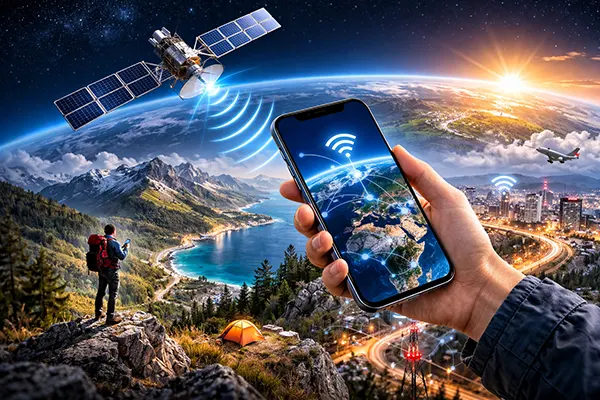
Satellite communication is moving beyond specialised devices and emergency beacons into the hands of everyday smartphone users. By 2026, major technology companies and telecom operators are actively testing and deploying direct-to-device satellite services. This shift is not just about coverage in remote areas — it signals a structural change in how mobile connectivity works, how networks are designed, and how users interact with communication services.
How Direct Satellite-to-Smartphone Technology Works Today
Modern satellite communication for smartphones relies on low Earth orbit (LEO) constellations operated by companies such as SpaceX (Starlink), AST SpaceMobile, and Lynk Global. Unlike traditional satellite phones, these systems aim to connect directly to standard smartphones without requiring specialised hardware. The key innovation lies in using modified cellular spectrum and advanced antennas in orbit.
In 2024–2026, early implementations have already appeared. Apple introduced emergency satellite messaging starting with the iPhone 14, while Android manufacturers are gradually integrating similar capabilities. At the same time, telecom providers such as T-Mobile in the US and Vodafone in Europe are partnering with satellite operators to extend coverage using existing mobile frequencies.
From a technical standpoint, satellites act as high-altitude cell towers. They communicate using standard LTE or emerging 5G protocols, though with limited bandwidth compared to terrestrial networks. Latency remains higher than ground-based connections, but improvements in satellite density and routing are gradually reducing this gap.
Current Limitations and Real-World Performance
Despite rapid progress, satellite connectivity is still constrained by bandwidth and energy requirements. Most services currently support text messaging and basic data rather than full internet access. Voice calls are being tested, but consistent quality remains a challenge due to signal strength and interference.
Battery consumption is another practical concern. Communicating with satellites requires more power than connecting to nearby cell towers, especially in weak signal conditions. Manufacturers are addressing this through software optimisation and directional signal handling, but trade-offs remain.
Coverage is improving but not yet seamless. While satellites can theoretically cover large areas, real-world availability depends on constellation density and regulatory approvals in different countries. As a result, users may still experience intermittent connectivity during the early rollout phase.
What Will Change for Users by 2026–2030
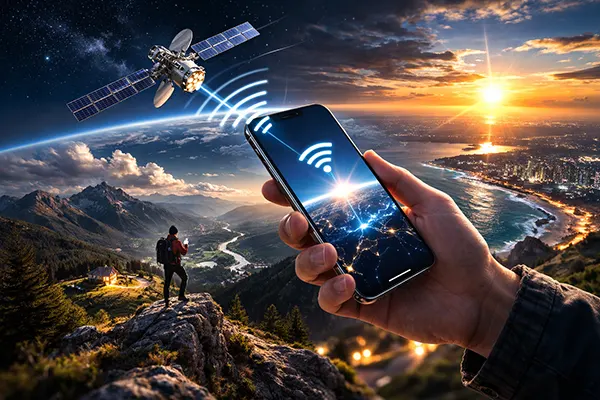
The most immediate change for users will be the disappearance of “no signal” zones in many parts of the world. Rural areas, mountains, oceans, and even certain urban dead spots will gradually become accessible through hybrid networks that combine terrestrial and satellite infrastructure.
Messaging will likely become the first fully integrated feature. Instead of switching to a separate emergency mode, smartphones will automatically route messages via satellite when no ground network is available. This will make communication more reliable without requiring user intervention.
Another important shift is the integration of satellite connectivity into everyday apps. Navigation services, emergency alerts, and location sharing will become more robust. For example, hikers or travellers will be able to send live location updates even without traditional coverage, improving safety and coordination.
Impact on Mobile Plans and Pricing
Satellite connectivity is expected to be bundled into mobile subscriptions rather than sold as a standalone service. Early indications from telecom operators suggest that basic satellite messaging may be included in standard plans, while higher-tier access (such as voice or data) could be offered as premium add-ons.
Pricing models are still evolving. Some providers may introduce usage-based billing for satellite data, while others may include limited allowances within monthly plans. Competition between operators and satellite providers will likely influence how affordable these services become.
Over time, as satellite infrastructure scales and costs decrease, the price gap between terrestrial and satellite connectivity is expected to narrow. However, full parity is unlikely in the short term due to the higher operational costs of maintaining satellite constellations.
Broader Implications for Connectivity and Infrastructure
The rise of direct satellite communication is changing how mobile networks are designed. Instead of relying solely on ground-based towers, operators are moving towards hybrid architectures that combine terrestrial and orbital infrastructure. This approach increases resilience and reduces dependency on local infrastructure.
For regions with limited telecom development, satellite connectivity could accelerate digital inclusion. Areas that previously required costly infrastructure investments may gain access to basic communication services more quickly. This has implications for education, emergency response, and economic activity.
At the same time, regulatory challenges remain significant. Governments must coordinate spectrum usage, licensing, and cross-border communication rules. These factors will influence how quickly and widely satellite services can expand.
Security, Privacy, and Reliability Considerations
Satellite communication introduces new security considerations. Signals travel over long distances and through shared infrastructure, which requires robust encryption and authentication mechanisms. Industry standards are evolving to address these risks, but implementation varies between providers.
Privacy is another concern. As connectivity becomes more ubiquitous, location tracking and data transmission expand into previously disconnected areas. Users will need clearer information about how their data is handled and protected across hybrid networks.
Reliability will improve over time, but it will not fully replace terrestrial networks. Instead, satellite connectivity is likely to function as a complementary layer — providing coverage where traditional infrastructure cannot. The most effective systems will be those that seamlessly switch between network types without noticeable disruption for the user.