Wireless Charging for Electric Vehicles While Driving: Myth or Near Reality?
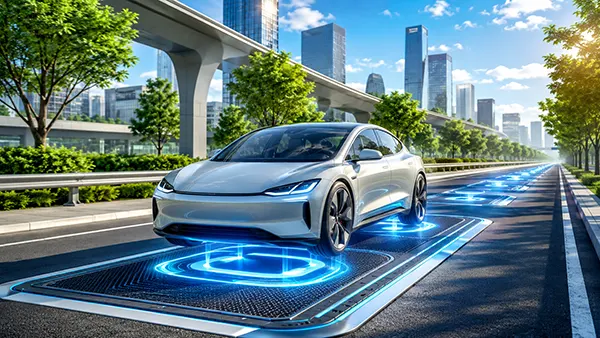
The rapid growth of electric vehicles has pushed engineers and transport authorities to search for solutions that can remove one of the biggest concerns connected with battery-powered transport: charging time. In recent years, wireless charging roads have moved from experimental concepts to functioning pilot projects in several countries, including Sweden, Germany, the United States, South Korea and Israel. By 2026, the technology is no longer considered science fiction, although large-scale adoption still faces technical, financial and infrastructure barriers. Dynamic wireless charging systems are designed to transfer electricity from coils embedded beneath the road surface directly to compatible electric vehicles while they are moving. This approach could reduce dependence on large batteries, improve efficiency in public transport fleets and change the future design of urban mobility.
How Dynamic Wireless Charging Works on Public Roads
Wireless charging for electric vehicles relies on electromagnetic induction. Coils placed under the asphalt generate a magnetic field, while a receiver installed underneath the vehicle converts that energy into electricity for the battery. Static wireless charging systems already exist in limited commercial use for taxis, buses and premium passenger vehicles, but dynamic charging introduces the additional challenge of transferring power safely and efficiently while the vehicle remains in motion.
Several pilot roads operating in 2026 demonstrate that the technology works under real traffic conditions. Sweden continues testing electrified sections near Stockholm and on routes designed for freight transport, while Israel has integrated wireless charging lanes into bus infrastructure in Tel Aviv. South Korea’s Online Electric Vehicle project also remains one of the earliest successful examples of inductive charging for public buses. These projects show that energy transfer efficiency can exceed 85% under controlled conditions, although efficiency still drops at higher speeds or during poor alignment between vehicle and road coils.
The infrastructure required for wireless charging roads is considerably more complex than traditional charging stations. Road sections must contain protected inductive components, power electronics, cooling systems and communication modules capable of recognising authorised vehicles. Maintenance also becomes more demanding because damaged road surfaces may affect charging performance. Despite these difficulties, transport planners view the technology as potentially valuable for buses, logistics fleets and commercial transport routes where vehicles follow predictable paths every day.
Why Governments and Manufacturers Are Investing in the Technology
One of the main reasons for growing investment is the possibility of reducing battery size in future electric vehicles. Modern EV batteries remain expensive, heavy and resource-intensive to manufacture. If vehicles can receive energy continuously while driving, manufacturers may eventually produce smaller battery packs without significantly reducing driving range. This could lower production costs and reduce pressure on global supplies of lithium, cobalt and nickel.
Governments are also interested in wireless charging because it supports climate targets connected with public transport electrification. Electric buses operating in urban areas often lose valuable operational time during charging stops. Dynamic charging allows buses to continue operating with fewer interruptions, improving efficiency for transport operators. Freight companies are also watching developments closely because long-distance electric trucks require extremely large battery systems that increase vehicle weight and reduce cargo capacity.
Automotive manufacturers including Volvo, Toyota, Hyundai and Stellantis have all participated in wireless charging research projects in recent years. At the same time, companies specialising in road electrification technology are competing to establish technical standards before mass adoption begins. Compatibility between infrastructure providers and vehicle manufacturers will become essential if countries decide to expand charging roads beyond experimental zones.
Main Technical and Financial Challenges Slowing Expansion
Although the concept has proven technically possible, large-scale implementation remains extremely expensive. Building charging roads requires major reconstruction work, especially in older cities with ageing transport infrastructure. Installing underground coils, power systems and communication equipment across thousands of kilometres would require billions of pounds in investment. For many governments, expanding fast-charging networks currently appears more financially practical than rebuilding road systems.
Standardisation also remains unresolved in 2026. Different companies use different power levels, coil designs and communication systems. Without international standards, manufacturers risk creating incompatible ecosystems similar to early charging connector disputes in the electric vehicle industry. Transport authorities are therefore cautious about committing to large infrastructure projects before technical regulations become more unified.
Another important concern involves energy efficiency and environmental impact. Wireless charging always loses some energy during transfer, particularly at higher speeds or when vehicles are not perfectly aligned with charging coils. While modern systems have improved considerably, wired charging remains more efficient overall. Critics argue that investing heavily in dynamic charging may not provide enough advantages compared with expanding ultra-fast charging networks and improving battery technology.
Safety, Durability and Public Concerns
Safety regulations surrounding electromagnetic exposure continue to be closely monitored by researchers and health agencies. Current pilot projects operate within international safety guidelines, and available evidence has not shown serious risks for drivers or pedestrians. However, public acceptance still depends on transparent testing and long-term monitoring, particularly in densely populated urban areas where charging roads may eventually become common.
Road durability is another major issue. Asphalt naturally degrades because of weather conditions, temperature changes and heavy traffic. Integrating sensitive electronic equipment beneath road surfaces creates additional maintenance complexity. Repairing damaged charging infrastructure could become costly and may require temporary road closures that disrupt traffic. Engineers are therefore focusing on modular road systems that allow individual charging segments to be replaced more easily.
Cybersecurity is increasingly relevant as transport infrastructure becomes more connected. Dynamic charging systems rely on continuous communication between vehicles, power networks and billing systems. Any vulnerability could potentially affect energy distribution or create operational disruptions. Because of this, cybersecurity protection has become a central part of new wireless charging infrastructure development projects across Europe, Asia and North America.
Could Wireless Charging Roads Become Common by the 2030s?
Most transport analysts agree that fully electrified highways covering entire countries are unlikely to appear before the 2030s or even later. However, targeted deployment in strategic areas is becoming increasingly realistic. Dedicated bus corridors, logistics centres, airports, industrial zones and freight routes are considered the most practical environments for early expansion because they involve predictable traffic patterns and commercially managed fleets.
Urban mobility projects are expected to lead adoption rather than private passenger cars. Cities seeking to reduce emissions from public transport may continue integrating wireless charging into bus lanes and taxi routes. This controlled environment allows operators to measure energy consumption, maintenance costs and charging efficiency more accurately before wider deployment is considered.
Battery technology will also influence the future relevance of dynamic charging. If solid-state batteries achieve large-scale commercial success and dramatically improve range and charging speed, the economic argument for electrified roads could weaken. On the other hand, if battery material shortages continue increasing production costs, wireless charging infrastructure may become more attractive as a way to reduce battery dependency.
Is the Technology Truly Close to Mass Adoption?
By 2026, wireless charging for electric vehicles while driving can no longer be dismissed as a fantasy. Multiple countries already operate functional pilot systems under real traffic conditions, and technological progress has accelerated significantly during the past decade. The engineering foundations are proven, and the transport sector increasingly recognises the potential value of dynamic energy transfer for commercial mobility.
At the same time, the technology is still far from becoming a universal solution for all electric vehicles. High infrastructure costs, limited standardisation, maintenance complexity and efficiency concerns continue slowing expansion. Most experts expect gradual adoption focused on commercial transport rather than immediate use by ordinary passenger cars.
The next decade will determine whether wireless charging roads become a specialised transport solution or an essential component of future smart mobility systems. Current developments suggest that the concept is closer to practical reality than many people expected a few years ago, but widespread adoption will depend on economics, government investment strategies and future advances in battery technology.