Biocomputers: How Living Cells Can Become Part of Computing Systems
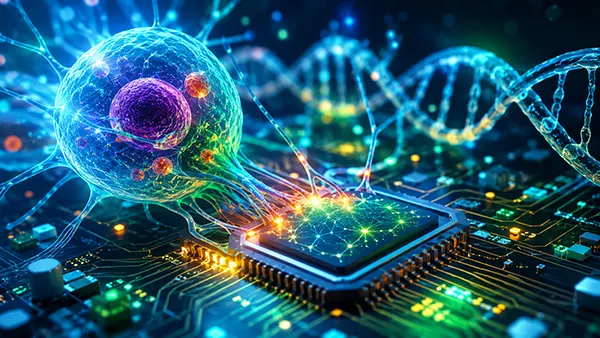
Computers have transformed nearly every aspect of modern life, yet they still operate according to principles that have changed little since the invention of the silicon microchip. As researchers search for new ways to increase computing power while reducing energy consumption, attention has turned to an unexpected source of inspiration: living cells. Instead of replacing traditional computers, biocomputers aim to combine biology and digital technology, creating systems capable of processing information through biological molecules, engineered cells and natural biochemical reactions. Although this field remains largely experimental in 2026, it has already demonstrated remarkable progress in medicine, environmental science and laboratory research, suggesting that biological computing may eventually complement conventional hardware in ways previously considered impossible.
What Are Biocomputers and Why Are Scientists Developing Them?
A biocomputer is a computing system that uses biological components instead of relying solely on silicon-based electronics. These components may include DNA molecules, proteins, enzymes, bacteria, yeast or even living human cells that have been engineered to perform specific computational tasks. Rather than processing information through electrical circuits alone, biological systems use chemical reactions, molecular interactions and genetic regulation to analyse data and generate measurable outputs.
The growing interest in biocomputing comes from the natural abilities of living organisms. Cells constantly collect information from their surroundings, process multiple signals simultaneously and respond with extraordinary efficiency. Researchers have recognised that these biological mechanisms resemble logical operations used in computer science, making it possible to design cellular systems that perform calculations, recognise patterns or make simple decisions based on predefined conditions.
Unlike traditional processors that require constant electrical power, many biological systems operate using nutrients and naturally occurring biochemical reactions. They also function in environments where conventional electronics cannot easily work, such as inside the human body. This opens opportunities for entirely new categories of intelligent medical technologies that could monitor diseases, detect harmful substances or deliver treatments only when necessary.
How Living Cells Perform Computational Tasks
Every living cell continuously receives chemical signals from its environment. It measures nutrient availability, oxygen levels, temperature changes and communication signals from neighbouring cells before activating or suppressing thousands of genes. Scientists have learned to redesign these natural processes so that cells behave similarly to programmable circuits.
One widely used approach involves synthetic biology, where researchers insert carefully designed genetic circuits into microorganisms. These circuits function similarly to electronic logic gates, performing operations comparable to AND, OR and NOT functions. Instead of electrical voltage determining the output, the result depends on the presence or absence of particular molecules inside the cell.
DNA itself can also store enormous amounts of digital information. Laboratory experiments have demonstrated that DNA molecules can encode text, photographs, videos and scientific databases while occupying only microscopic physical space. In addition to long-term storage, specially designed DNA strands can participate in molecular computations by combining, separating or changing structure according to predefined biochemical rules.
Current Applications of Biocomputers in 2026
Although fully programmable biological computers remain under development, several practical applications have already emerged. Most current systems operate in research laboratories, hospitals and biotechnology companies, where biological computing techniques solve problems that conventional electronics cannot easily address.
One of the most promising medical applications involves engineered immune cells capable of recognising combinations of disease biomarkers. Instead of responding to a single signal, these modified cells analyse several biological conditions before activating. This additional level of decision-making improves precision and reduces the likelihood of attacking healthy tissue, making advanced cell therapies safer and more selective.
Environmental monitoring represents another rapidly growing field. Scientists have developed bacteria that detect pollutants, toxic metals or hazardous chemicals by producing measurable fluorescent signals when specific contaminants are present. Because these living sensors operate continuously, they can monitor ecosystems more efficiently than many traditional sampling methods.
DNA Computing and Medical Diagnostics
DNA computing has become one of the most actively studied branches of biological computing. Instead of relying on electronic processors, specially designed DNA molecules perform calculations through controlled chemical reactions. Millions of these reactions occur simultaneously, allowing researchers to solve certain highly specialised computational problems extremely efficiently.
Medical diagnostics has benefited significantly from these developments. DNA-based biosensors can identify fragments of viral RNA, bacterial DNA or cancer-associated mutations with remarkable sensitivity. Because the biological components naturally recognise specific molecular sequences, diagnostic systems can often detect diseases at very early stages before symptoms become severe.
Researchers are also developing intelligent therapeutic systems that combine diagnosis with treatment. Experimental biological circuits can recognise disease-specific molecular signatures and release medication only when predetermined biological conditions are satisfied. Although many of these technologies are still undergoing clinical evaluation, they illustrate how computing and medicine are becoming increasingly interconnected.
Challenges, Ethical Questions and the Future of Biocomputing
Despite impressive scientific progress, biocomputers face significant technical limitations. Living cells are far more variable than manufactured electronic components, making consistent performance difficult to achieve. Environmental conditions such as temperature, nutrient availability and genetic mutations can influence biological behaviour, requiring sophisticated control methods to maintain reliable operation.
Scalability also remains a major obstacle. Modern microprocessors perform billions of calculations every second with exceptional accuracy, while biological systems generally operate more slowly. As a result, researchers do not expect living cells to replace conventional computers for everyday computing tasks such as gaming, office software or artificial intelligence training.
Ethical considerations accompany every major advance in synthetic biology. The engineering of living organisms requires strict laboratory safety standards, transparent regulation and careful assessment of environmental risks. Scientists must ensure that genetically modified biological systems cannot spread unintentionally outside controlled environments or produce unintended biological consequences.
What Could the Next Decade Bring?
Over the next decade, biocomputers are expected to develop primarily as specialised technologies rather than universal replacements for silicon hardware. Hybrid systems combining electronic processors with biological components may provide the greatest practical value by allowing each technology to perform tasks suited to its strengths.
Healthcare is likely to remain the sector experiencing the fastest adoption. Researchers are investigating implantable biological sensors capable of continuously monitoring glucose levels, inflammatory markers, hormone concentrations and other health indicators. Future versions may communicate directly with wearable medical devices, providing highly personalised monitoring without frequent laboratory testing.
Advances in artificial intelligence, synthetic biology and molecular engineering are accelerating progress across the entire field. As computational models become more accurate and gene-editing techniques continue to improve, biological computing systems are expected to become increasingly reliable and practical. While household biocomputers are unlikely to appear in the immediate future, living cells are steadily becoming valuable partners in scientific research, precision medicine and environmental protection, demonstrating that the future of computing may extend far beyond silicon alone.